Updated on September 11th, 2026 by Nikolaos Sismanis
High-yield stocks that pay monthly dividends provide a compelling mix of:
- Current income
- Monthly payouts
This article analyzes the 20 highest-yielding monthly paying dividend stocks.
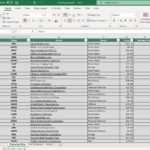
The following 20 monthly dividend stocks have high dividend yields above 5%. Stocks are listed by their dividend yields, from lowest to highest.
The list excludes royalty trusts, whose payouts can fluctuate sharply with commodity prices, production volumes, and other factors outside management’s control.
Note: Treat this list as a short list for further research. Many high-yield monthly payers also carry significant risks. Due diligence and an understanding of this risk is essential before investing.
You can instantly jump to an individual section of the article by utilizing the links below:
- High-Yield Monthly Dividend Stock #20: Capital Southwest Corporation (CSWC)
- High-Yield Monthly Dividend Stock #19: MSC Income Fund (MSIF)
- High-Yield Monthly Dividend Stock #18: Himalaya Shipping (HSHP)
- High-Yield Monthly Dividend Stock #17: Trinity Capital (TRIN)
- High-Yield Monthly Dividend Stock #16: Ellington Financial (EFC)
- High-Yield Monthly Dividend Stock #15: Timbercreek Financial Corp. (TBCRF)
- High-Yield Monthly Dividend Stock #14: PennantPark Investment Corporation (PNNT)
- High-Yield Monthly Dividend Stock #13: PennantPark Floating Rate Capital (PFLT)
- High-Yield Monthly Dividend Stock #12: AGNC Investment Corporation (AGNC)
- High-Yield Monthly Dividend Stock #11: Horizon Technology Finance (HRZN)
- High-Yield Monthly Dividend Stock #10: BCP Investment Corporation (BCIC)
- High-Yield Monthly Dividend Stock #9: Dynex Capital (DX)
- High-Yield Monthly Dividend Stock #8: Stellus Capital (SCM)
- High-Yield Monthly Dividend Stock #7: CION Investment Corporation (CION)
- High-Yield Monthly Dividend Stock #6: Saratoga Investment Corp. (SAR)
- High-Yield Monthly Dividend Stock #5: ARMOUR Residential REIT (ARR)
- High-Yield Monthly Dividend Stock #4: Orchid Island Capital (ORC)
- High-Yield Monthly Dividend Stock #3: Prospect Capital (PSEC)
- High-Yield Monthly Dividend Stock #2: Invesco Mortgage Capital (IVR)
- High-Yield Monthly Dividend Stock #1: Oxford Square Capital (OXSQ)
High-Yield Monthly Dividend Stock #20: Capital Southwest Corporation (CSWC)
- Dividend Yield: 9.5%
Capital Southwest Corporation is an internally managed business development company that provides debt and equity capital to U.S. lower-middle-market businesses.
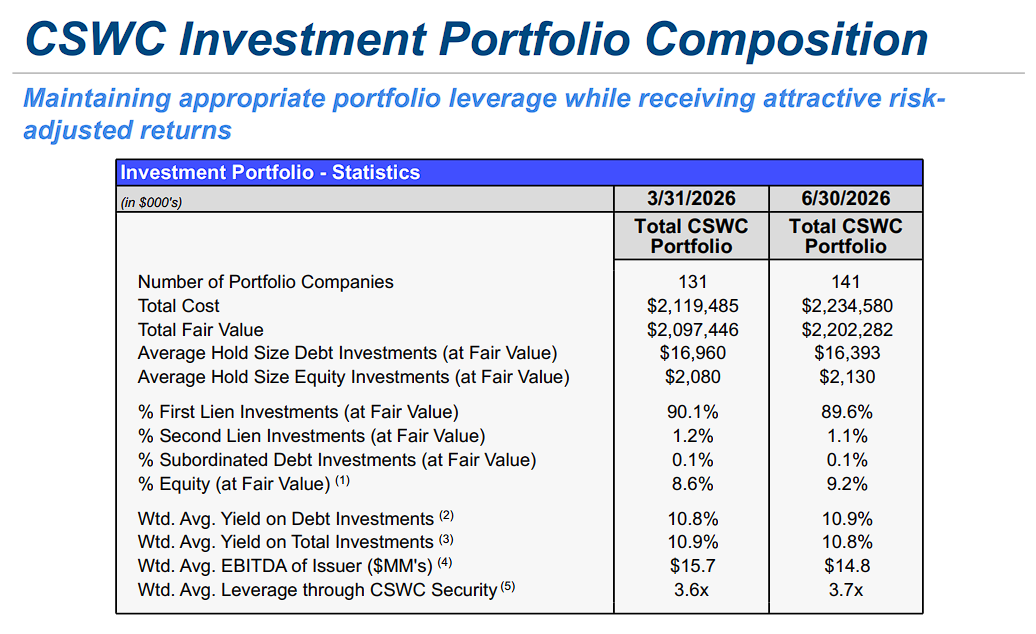
Its internal structure and emphasis on first-lien senior secured loans support operating efficiency and credit protection, although results remain sensitive to borrower health and interest rates.
For the fiscal first quarter ended June 30th, 2026, the investment portfolio reached $2.2 billion at fair value.
The $2.0 billion credit portfolio remained 99% first-lien debt and yielded 10.9%, while non-accruals represented 1.1% of total investments at fair value.
Total investment income increased sequentially to $61.0 million.
Pre-tax net investment income was $35.0 million, or $0.57 per share, and net asset value was $16.61 per share, compared with $16.69 three months earlier.
Capital Southwest declared a $0.58 regular quarterly dividend, paid as three monthly installments of $0.1934, plus a $0.06 September supplemental distribution.
Pre-tax NII nearly covered the regular payout, while estimated undistributed taxable income of $0.87 per share provides additional flexibility.
Originations were exceptionally active at $222.3 million, and the CapTrin joint venture grew to a $97.8 million portfolio of entirely first-lien loans.
That growth opportunity is attractive, but you should watch the modest rise in non-accrual cost and whether recurring earnings continue covering the regular dividend without relying on supplemental income.
High-Yield Monthly Dividend Stock #19: MSC Income Fund (MSIF)
- Dividend Yield: 10.5%
MSC Income Fund is a business development company advised by a Main Street Capital subsidiary.
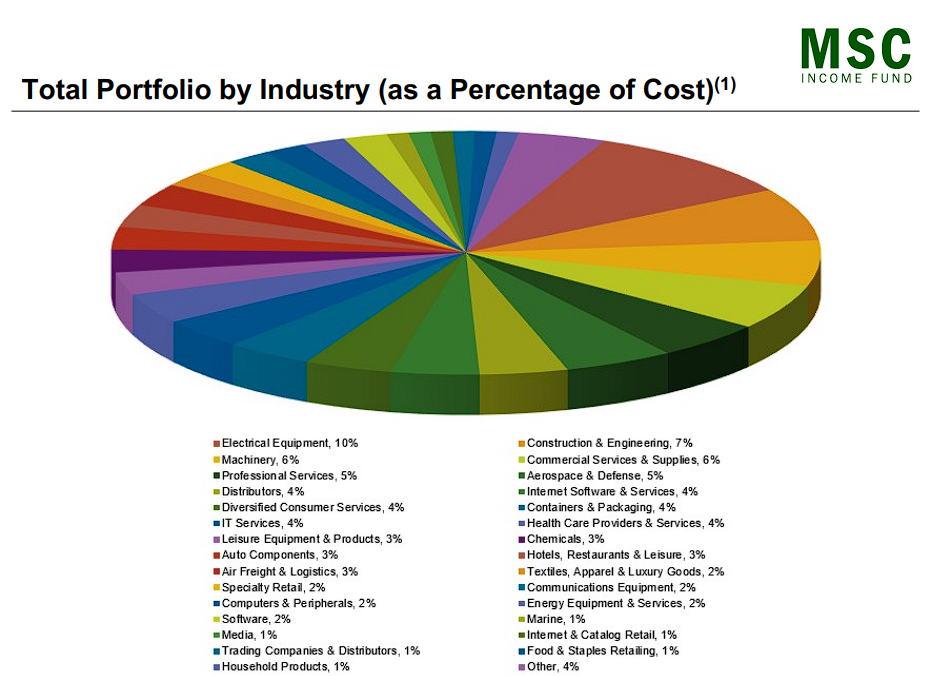
It lends mainly to private-equity-backed companies and co-invests with Main Street in lower-middle-market businesses, combining recurring interest income with selective equity upside.
Second-quarter 2026 total investment income was $35.7 million. Net investment income was $12.0 million, or $0.26 per share, while adjusted NII was $14.9 million, or $0.33 per share.
An $11.6 million realized gain from the exit of Centre Technologies helped produce a $29.3 million increase in net assets from operations, or $0.65 per share.
Net asset value increased 4.0% sequentially to $16.51, and non-accruals were 1.9% of investments at fair value.
MSC Income declared regular monthly dividends of $0.11 for July, August, and September, plus a $0.03 September supplemental distribution.
Adjusted NII exactly covered the $0.33 regular quarterly total, but did not cover the supplemental payment by itself.
New private-loan fundings totaled $62.2 million, and 99.5% of that portfolio was first-lien debt at quarter-end.
Management also authorized a $20 million stock-repurchase plan, while Main Street announced a separate $20 million purchase program beginning in September.
Accretive repurchases and strong first-lien positioning are constructive, but leverage of 0.88 times and the gap between GAAP and adjusted NII merit attention.
Deep Dive: Click here to download (for free) our most recent 3-Page Sure Analysis PDF report on MSC Income Fund (MSIF).
High-Yield Monthly Dividend Stock #18: Himalaya Shipping (HSHP)
- Dividend Yield: 11.0%
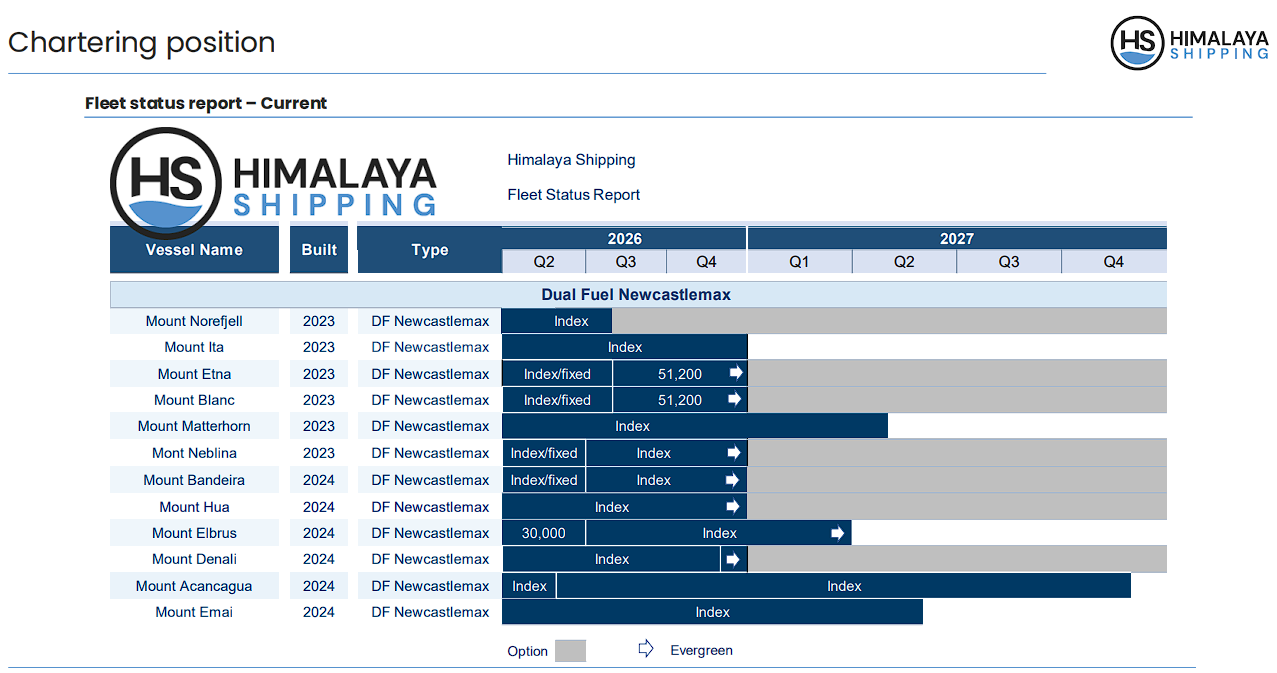
Himalaya Shipping is a Bermuda-based dry-bulk carrier with 12 Newcastlemax vessels in operation.
Its modern ships use liquefied natural gas and scrubbers, while most charters are linked to the volatile Capesize freight market.
Second-quarter 2026 time-charter revenue reached $53.3 million, representing gross time-charter-equivalent earnings of approximately $50,600 per day.
That was well above the $36,303 average Baltic 5TC 180 Capesize Index for the quarter.
Net income was $24.6 million and EBITDA was $44.0 million, reflecting much stronger charter rates than one year earlier.
Management also secured a 12-to-14-month index-linked charter for Mount Emai at a premium to the benchmark and temporarily fixed four vessels at an average $56,500 per day for June.
Himalaya distributed $0.15, $0.22, and $0.22 per share for April, May, and June, followed by $0.22 for July.
The board subsequently approved a $0.25-per-share cash distribution for August.
These monthly payments are variable and tied closely to operating cash generation, so the spreadsheet’s 11.0% annualized yield can change rapidly.
The strong recent freight environment supports near-term income, but investors should not mistake it for a fixed dividend commitment.
Capesize rates, charterer performance, vessel availability, financing costs, and industry cyclicality will determine future distributions.
High-Yield Monthly Dividend Stock #17: Trinity Capital (TRIN)
- Dividend Yield: 11.2%
Trinity Capital is an internally managed business development company and alternative asset manager lending to growth-oriented businesses.
Its platform spans sponsor finance, equipment finance, technology lending, asset-based lending, and healthcare and life-sciences credit.
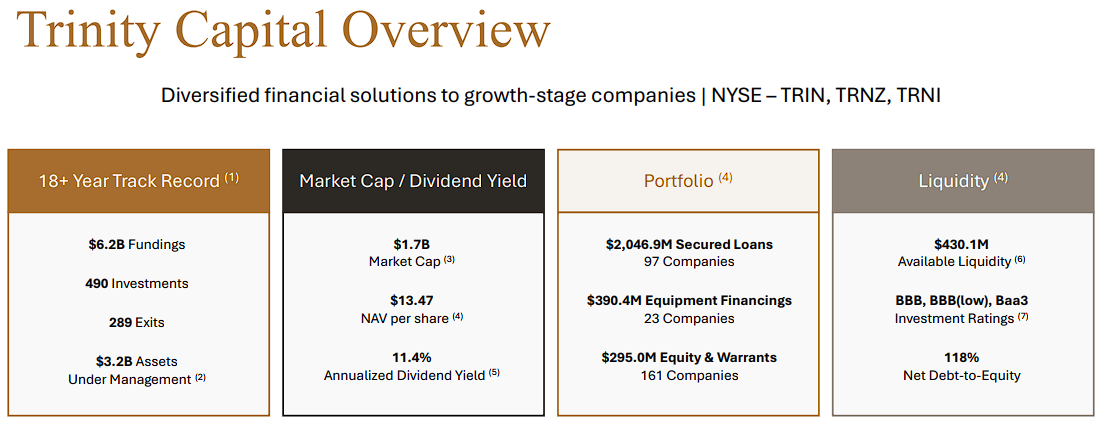
Second-quarter 2026 total investment income increased 25.5% year-over-year to $87.2 million.
Net investment income reached a record $46.0 million, or $0.51 per share, while net asset value rose sequentially to $13.47 per share.
The $2.7 billion portfolio covered 190 companies and was 89.3% first-lien debt.
Non-accruals were 0.8% of the debt portfolio at fair value, and net leverage increased modestly to 1.18 times.
Investment activity was exceptionally strong: Trinity originated $709 million of commitments, funded $619 million, and received $378 million from exits and repayments.
Management’s broader funds platform and new SBIC capacity can expand fee income and sourcing, but rapid deployment increases underwriting and execution demands.
The board maintained $0.17 monthly dividends for July through September, making this the 27th consecutive quarter with a consistent regular distribution.
Quarterly NII exactly matched the $0.51 dividend total, leaving little current cushion.
You should balance the strong origination engine, internal management, and low non-accruals against leverage, venture-credit risk, and the possibility that portfolio growth outpaces credit controls.
Deep Dive: Click here to download (for free) our most recent 3-Page Sure Analysis PDF report on Trinity Capital (TRIN).
High-Yield Monthly Dividend Stock #16: Ellington Financial (EFC)
- Dividend Yield: 11.7%
Ellington Financial owns residential and commercial mortgage assets, consumer loans, corporate credit, and mortgage-backed securities.
It also owns Longbridge Financial, a reverse-mortgage originator and servicer that adds operating income beyond the investment portfolio.
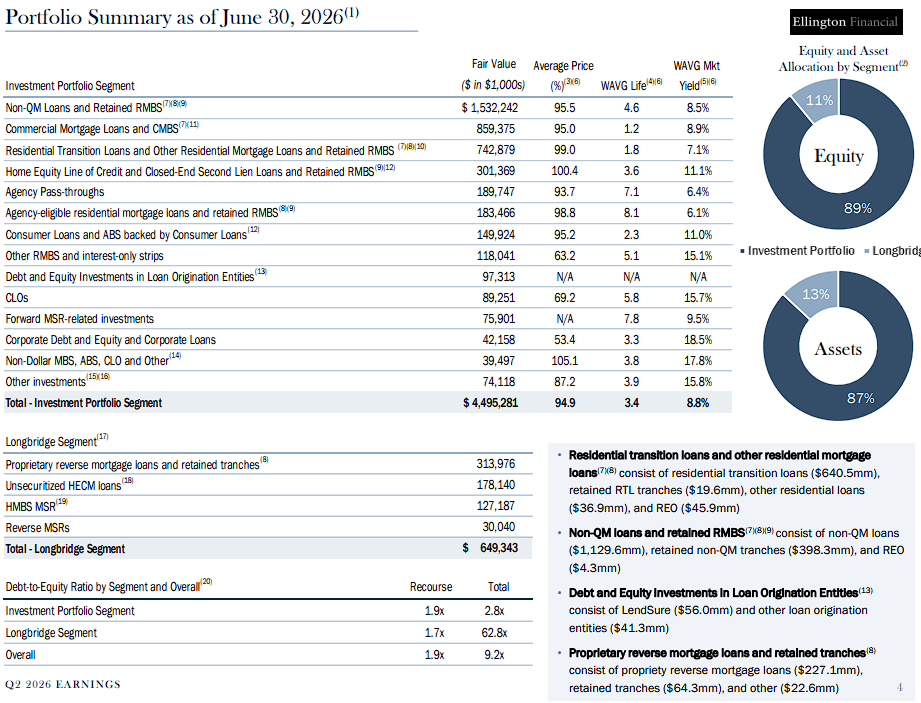
In the second quarter of 2026, Ellington generated net income of $54.4 million, or $0.43 per common share, and adjusted distributable earnings of $75.5 million, or $0.60 per share.
Book value increased to $13.61 per share after $0.39 of quarterly dividends.
The adjusted long investment portfolio grew to $4.50 billion, while Longbridge originated $589.7 million of loans, 38% more than one year earlier.
Longbridge’s HMBS issuance share reached 29%, making it the market’s second-largest issuer during the quarter.
Ellington maintained its $0.13 monthly dividend, and adjusted distributable earnings covered the $0.39 quarterly payout by a healthy margin.
First-half adjusted earnings of $1.15 also comfortably exceeded dividends of $0.78. Strong loan performance, securitization activity, and Longbridge’s growth support the investment case, while $1.86 billion of unencumbered assets adds flexibility.
Nevertheless, the 1.9-times recourse debt-to-equity ratio and 9.2-times total debt-to-equity ratio show the importance of leverage.
Dividend durability still depends on recurring portfolio income, funding access, housing conditions, and disciplined hedging as rates and spreads move.
High-Yield Monthly Dividend Stock #15: Timbercreek Financial Corp. (TBCRF)
- Dividend Yield: 12.2%
Timbercreek Financial Corp. is a Canadian non-bank lender providing shorter-duration, structured commercial real estate financing.
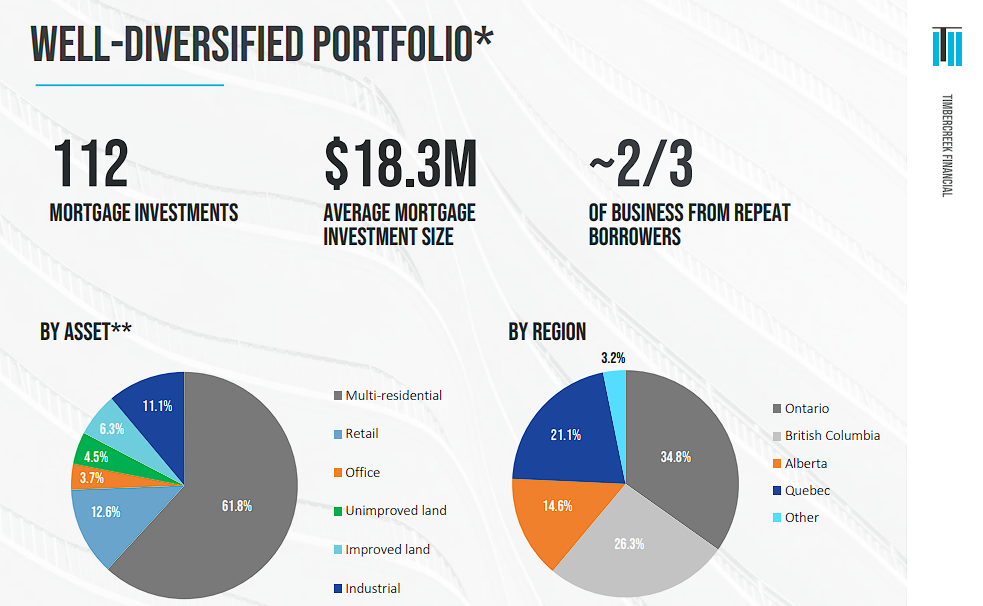
Its portfolio is concentrated in first mortgages on income-producing properties, particularly multifamily assets in major Canadian markets.
Second-quarter 2026 net investment income was C$24.9 million, while distributable income held at C$14.6 million, or C$0.18 per share.
Timbercreek declared C$14.3 million, or C$0.17 per share, of dividends, producing a tight 97.7% distributable-income payout ratio.
Expected credit losses increased to C$6.7 million, reducing net income to C$7.8 million.
The C$1.14 billion net mortgage portfolio was 93.9% first mortgages, 81.3% backed by cash-flowing properties, and 60.1% exposed to multifamily residential assets.
Management advanced C$153.5 million into new and existing mortgages during the quarter and continued resolving legacy problem assets.
Two Stage 3 Calgary office and retail properties were sold, helping reduce Stage 3 mortgages by C$28.1 million during the quarter and by 51.1% year-to-date.
Timbercreek maintained its C$0.0575 monthly dividend and also declared payments through year-end.
Coverage remains thin, so redeploying recovered capital, controlling credit losses, and offsetting the portfolio rate decline to 7.6% with lower funding costs will be central to dividend durability.
U.S. investors should also remember that exchange rates affect the dividend’s translated dollar value.
High-Yield Monthly Dividend Stock #14: PennantPark Investment Corporation (PNNT)
- Dividend Yield: 13.1%
PennantPark Investment Corporation provides private credit and equity capital to U.S. middle-market companies.
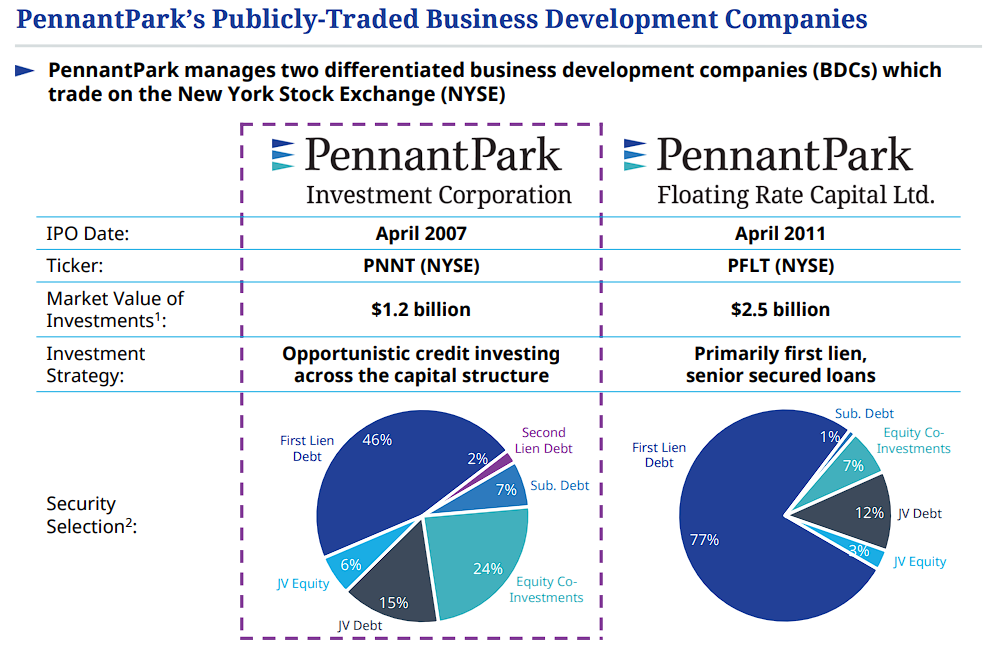
Its portfolio includes first-lien loans, subordinated debt, government securities, and a sizable equity allocation that can produce gains but increases volatility.
For the fiscal third quarter ended June 30th, 2026, the portfolio totaled $1.19 billion and yielded 11.0% on interest-bearing debt.
Total investment income declined to $24.8 million as the portfolio shrank and its debt yield fell.
Net investment income was $8.9 million, or $0.14 per share, unchanged on a per-share basis from the prior quarter.
Net asset value fell 2.5% sequentially to $6.56 per share.
Four investments were on non-accrual, representing 0.8% of portfolio fair value, while regulatory debt-to-equity was 1.29 times.
PennantPark declared $0.12 per share of base distributions and another $0.12 of supplemental distributions during the quarter.
The current $0.04 monthly base rate annualizes to the spreadsheet’s 13.1% yield; the equal-sized supplement is not included in that figure and should not be assumed permanent.
Quarterly NII covered the base dividend, but only about 58% of the combined payout.
Management is rotating equity proceeds into income-producing debt, which could improve recurring coverage.
Until that transition lifts NII, the supplemental dividend, NAV erosion, and portfolio credit remain the main risks.
High-Yield Monthly Dividend Stock #13: PennantPark Floating Rate Capital (PFLT)
- Dividend Yield: 13.1%
PennantPark Floating Rate Capital is a business development company focused primarily on floating-rate senior secured loans to U.S. middle-market businesses.
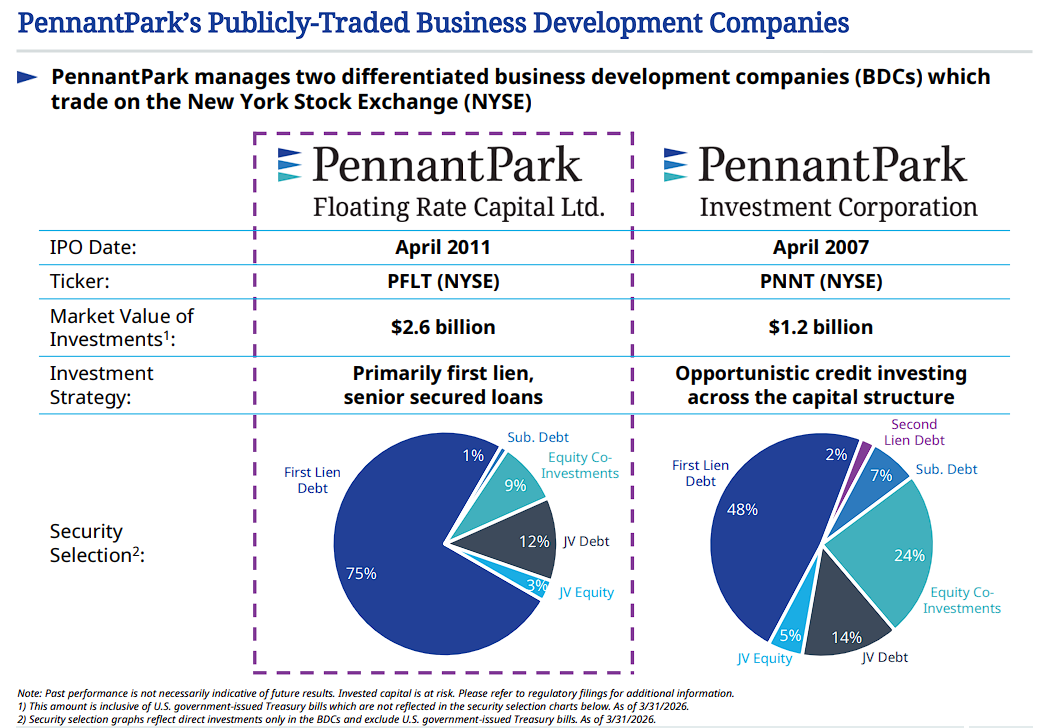
For the fiscal third quarter ended June 30th, 2026, the investment portfolio totaled $2.50 billion across 159 companies and yielded 9.8% on debt investments.
Nearly all debt investments carry variable rates, which supports income when rates are elevated but creates pressure when benchmark rates decline.
Total investment income increased to $66.1 million, while net investment income was $25.9 million, or $0.26 per share.
Net asset value declined 2.0% sequentially to $10.26 per share as $37.3 million of realized gains were more than offset by unrealized depreciation.
Four portfolio companies were on non-accrual, equal to 0.4% of the portfolio at fair value.
PennantPark invested $212.1 million during the quarter, while sales and repayments were higher at $271.7 million.
The company will maintain a $0.08 base monthly dividend and a $0.0033 monthly supplemental payment for October through December.
The spreadsheet yield uses the $0.96 annualized base dividend, while the supplemental amount adds modest income if continued.
Quarterly NII slightly exceeded the current combined three-month run rate, but the NAV decline and falling loan yields limit the cushion.
Investors should monitor credit quality, recurring NII coverage, leverage, and further rate compression.
High-Yield Monthly Dividend Stock #12: AGNC Investment Corporation (AGNC)
- Dividend Yield: 13.4%
AGNC Investment Corporation is a mortgage REIT that invests primarily in Agency residential mortgage-backed securities.
Credit losses on these assets are largely guaranteed by government-sponsored enterprises, but leverage, funding costs, prepayments, and interest-rate hedges can still produce substantial book-value volatility.
In the second quarter of 2026, AGNC generated $0.52 of comprehensive income per share and $0.40 of net spread and dollar roll income.
Tangible net book value increased 2.4% to $8.58 per share, and the combination of the $0.36 quarterly dividend and the book-value gain produced a 6.7% economic return on tangible common equity.
The investment portfolio totaled $97.2 billion, while tangible at-risk leverage held at 7.4 times.
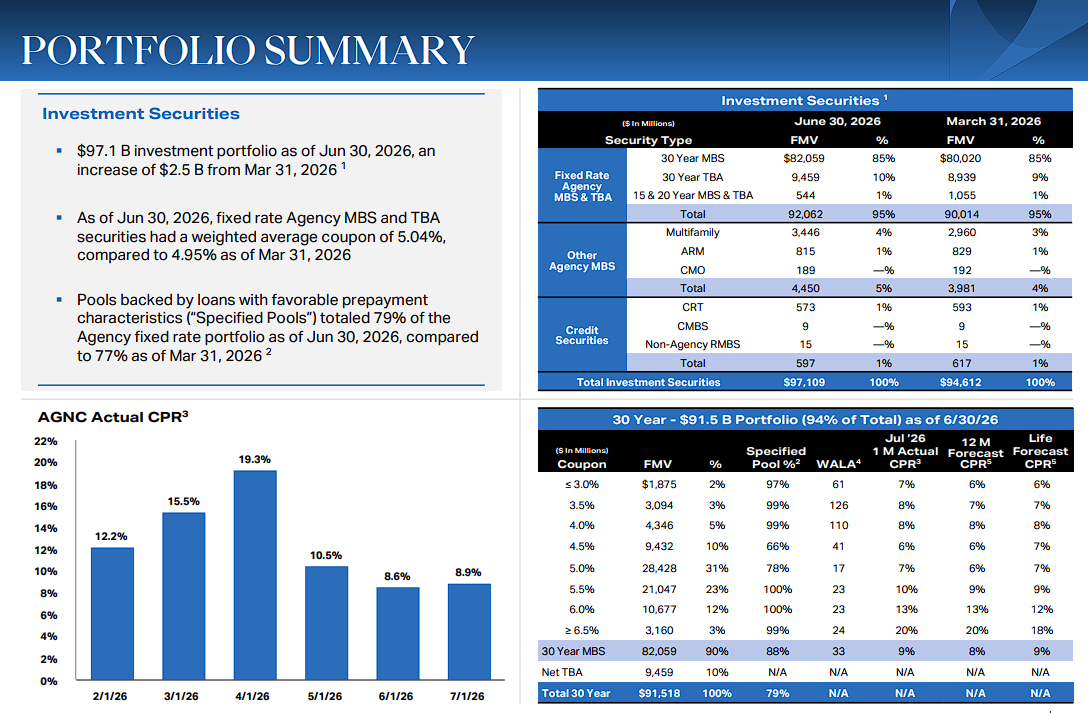
AGNC declared its familiar $0.12 monthly dividend throughout the quarter.
Quarterly net spread and dollar roll income covered the $0.36 payout, although the coverage margin was not large.
The company ended June with $7.5 billion of unencumbered cash and Agency securities, equal to 62% of tangible equity, providing meaningful liquidity.
Agency MBS spreads and hedging execution remain decisive: favorable spread performance can support book value, while abrupt rate or volatility changes can quickly reverse results.
High-Yield Monthly Dividend Stock #11: Horizon Technology Finance (HRZN)
- Dividend Yield: 14.8%
Horizon Technology Finance is a business development company specializing in venture debt for technology, life-sciences, healthcare, and sustainability businesses.
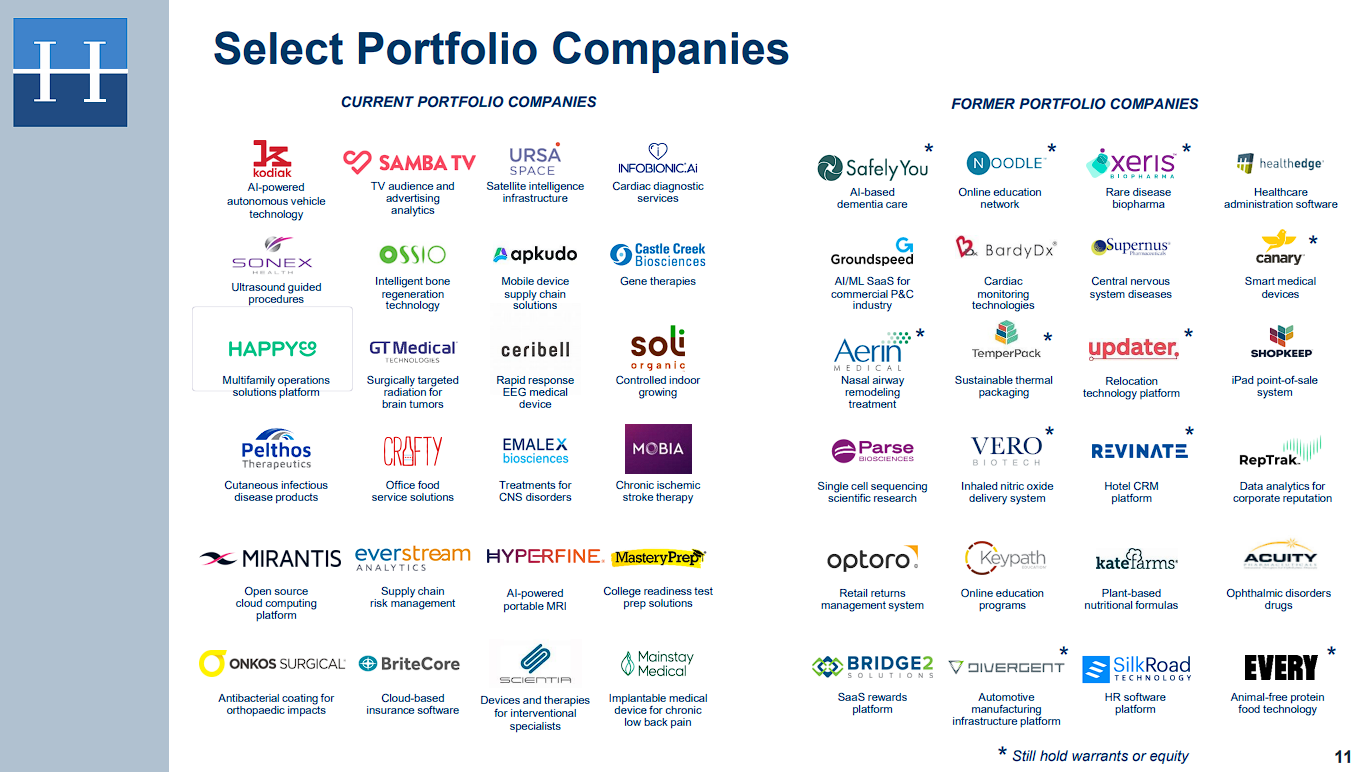
It originates senior secured loans and often receives warrants, creating potential equity upside alongside interest income.
Second-quarter 2026 total investment income increased to $25.0 million, but net investment income fell to $7.4 million, or $0.11 per share.
Results included $4.4 million, or $0.07 per share, of non-recurring expenses from the completed merger with Monroe Capital Corporation. Excluding those costs, NII roughly covered the $0.18 regular quarterly distribution.
However, $38.5 million of unrealized depreciation—substantially related to one portfolio company—reduced net asset value to $6.23 per share from $6.98.
Horizon declared regular monthly distributions of $0.06 for October through December, plus $0.03 monthly special distributions funded from spillover income.
The base payout appears more sustainable than the combined $0.09 payment, and spillover income declined to $0.33 per share.
The merger expands Horizon’s balance sheet, while $135 million of cash, $329 million of credit capacity, and a $228 million committed backlog support future deployment.
Still, the sharp NAV decline demonstrates the concentrated risk in venture lending.
Credit performance, investment deployment, and recurring NII must improve before we can treat the full distribution rate as durable.
High-Yield Monthly Dividend Stock #10: BCP Investment Corporation (BCIC)
- Dividend Yield: 14.9%
BCP Investment Corporation is an externally managed business development company investing in first- and second-lien loans, mezzanine debt, joint ventures, and selected equity securities of middle-market businesses.
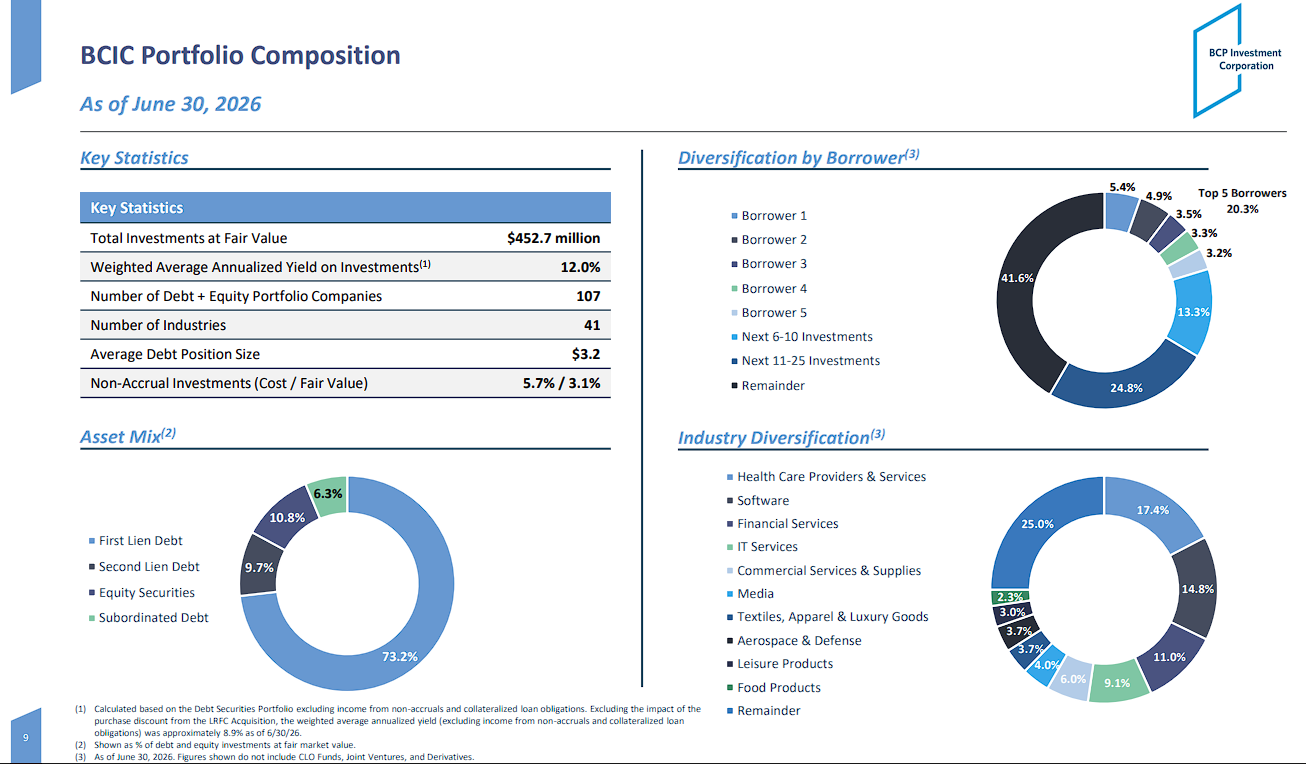
Sierra Crest Investment Management, a BC Partners affiliate, manages the portfolio.
Second-quarter 2026 total investment income declined sequentially to $15.2 million, while net investment income fell to $5.5 million, or $0.45 per share.
That still covered the $0.27 base distribution, but net asset value dropped to $14.49 per share from $15.60. Software and software-exposed holdings accounted for about 47% of the quarter’s unrealized markdowns.
Non-accruals declined from nine portfolio companies to seven, although they increased to 3.1% of investments at fair value.
BCP maintained the $0.09 monthly base distribution for October through December.
Management also refinanced its revolving debt after quarter-end, doubling KeyBank capacity to $150 million, reducing the borrowing spread, extending maturity to 2031, and repaying the JPMorgan facility.
The transaction should improve funding flexibility, while gross borrowings fell during the quarter and asset coverage improved to 162%.
However, NAV has now declined for a second consecutive quarter, and net leverage remained high at 1.6 times.
The regular dividend is well covered by current NII, but portfolio marks, software exposure, non-accruals, and leverage deserve more weight than the headline yield.
High-Yield Monthly Dividend Stock #9: Dynex Capital (DX)
- Dividend Yield: 15.8%
Dynex Capital is an internally managed mortgage REIT that invests mainly in highly liquid Agency residential and commercial mortgage-backed securities.
Its returns depend on the spread between asset yields and funding costs, along with leverage and the effectiveness of its interest-rate hedges.
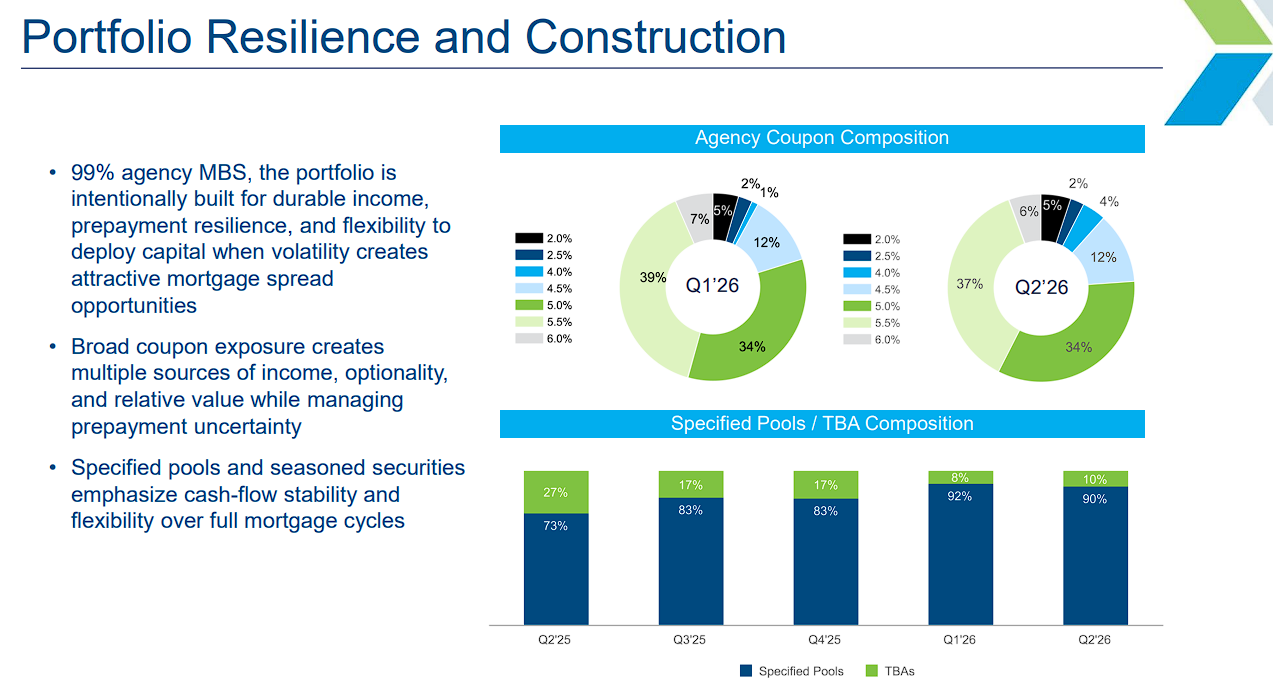
Dynex produced a 6.4% total economic return in the second quarter of 2026.
Book value increased to $12.90 per share from $12.60, comprehensive income was $0.80 per share, and dividends declared totaled $0.51.
The investment portfolio grew 11% to $27.6 billion after the company raised $391 million of common equity and purchased $2.8 billion of Agency MBS.
Leverage, including TBAs at cost, declined to 8.1 times equity from 8.6 times.
The company’s $0.17 monthly dividend was fully reflected in the quarter’s economic return, while earnings available for distribution improved to $0.36 per share.
That measure did not cover the full $0.51 payout, so book-value performance and portfolio gains remain important to the overall return.
Liquidity was strong at $1.6 billion, or 51% of equity.
Dynex’s scale and hedging reduced the damage from higher rates, but the dividend remains exposed to mortgage spreads, financing costs, prepayments, and capital-market conditions.
Deep Dive: Click here to download (for free) our most recent 3-Page Sure Analysis PDF report on Dynex Capital (DX).
High-Yield Monthly Dividend Stock #8: Stellus Capital (SCM)
- Dividend Yield: 16.0%
Stellus Capital is a business development company providing first-lien, second-lien, mezzanine, and occasional equity capital to U.S. middle-market businesses.
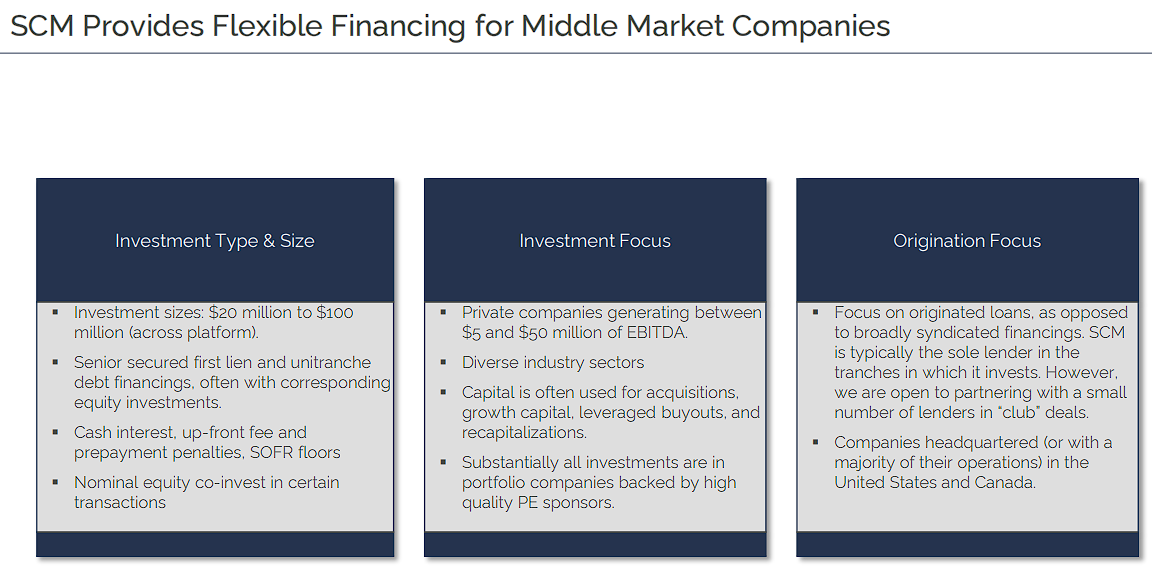
Its loans are generally secured and floating-rate, supporting current income but exposing earnings to lower benchmark rates and borrower credit conditions.
For the second quarter of 2026, total investment income declined 13.2% year-over-year to $22.3 million.
GAAP and core net investment income were both $7.5 million, or $0.26 per share, down from $0.34 and $0.35 per share, respectively.
The portfolio ended June at $968.2 million at fair value, compared with $1.01 billion at year-end, as $49.2 million of repayments exceeded $18.0 million of new investments.
Net asset value was $12.80 per share, nearly unchanged from $12.82 at year-end, as unrealized appreciation offset realized losses and the distribution shortfall.
Stellus declared $0.34 per share in quarterly distributions, so recurring NII did not cover the payout.
Management has repurchased 467,317 shares since launching its buyback in March, at an average price of $8.50.
The third SBIC license received in July could provide additional lower-cost, long-duration capital.
Still, weaker earnings, net portfolio runoff, and thin distribution coverage make the 16.0% yield risky.
Investors should require improvement in deployment, credit quality, and recurring NII before treating the monthly payout as durable.
Deep Dive: Click here to download (for free) our most recent 3-Page Sure Analysis PDF report on Stellus Capital (SCM).
High-Yield Monthly Dividend Stock #7: CION Investment Corporation (CION)
- Dividend Yield: 16.5%
CION Investment Corporation is an externally managed business development company focused on senior secured loans to U.S. middle-market businesses.
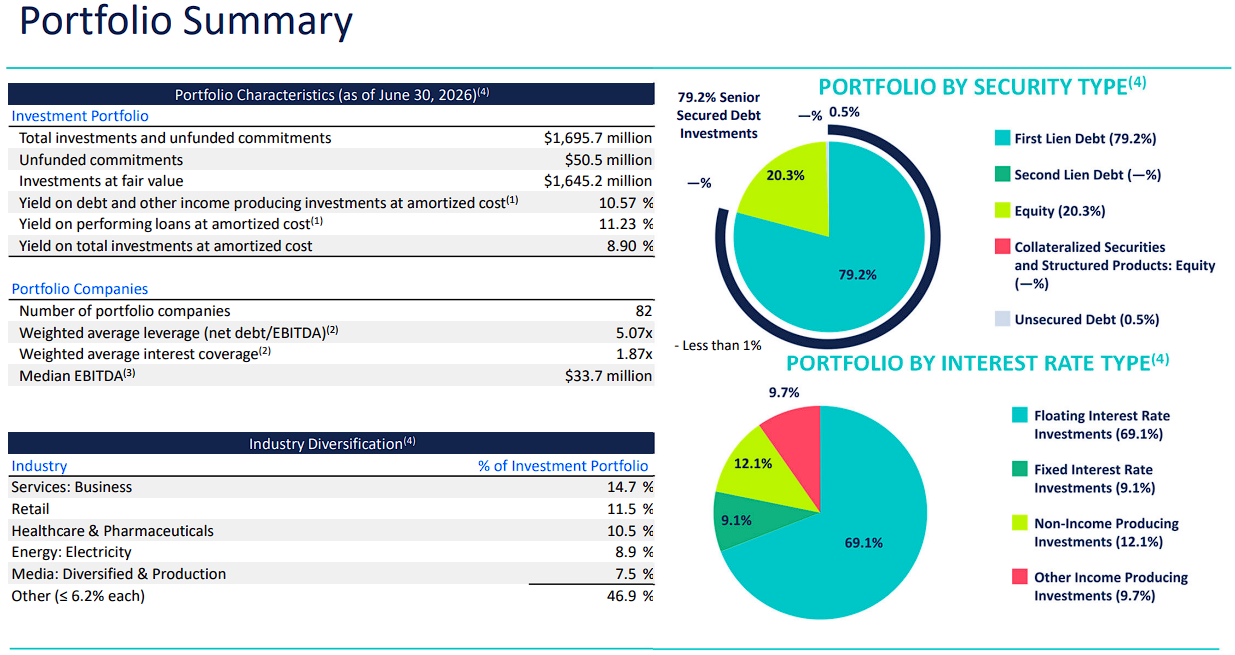
At the end of the second quarter, 79.2% of its $1.65 billion portfolio consisted of first-lien investments across 82 companies and 23 industries.
Second-quarter 2026 total investment income was $49.8 million. Net investment income improved to $14.2 million, or $0.29 per share, from $0.25 in the first quarter.
Net asset value rebounded 3.5% to $13.57 per share, helped by mark-to-market gains on equity investments.
Non-accruals improved to 1.44% of fair value, and net debt-to-equity declined to 1.52 times as sales and repayments exceeded new fundings by $90 million.
CION maintained its $0.10 monthly base distribution for October through December.
Quarterly NII nearly covered the $0.30 payout, a meaningful improvement, but the one-cent shortfall still leaves a limited cushion.
Management repurchased $8.0 million of shares below NAV during the quarter, raised the repurchase authorization to $130 million, and repaid $125 million on its bank facility after quarter-end.
Those actions can improve per-share value and reduce leverage, although a shrinking portfolio can also pressure future interest income.
Investors should watch recurring coverage, realized credit losses, leverage, and the pace of portfolio reinvestment.
High-Yield Monthly Dividend Stock #6: Saratoga Investment Corp. (SAR)
- Dividend Yield: 17.2%
Saratoga Investment Corp. is a business development company that lends to U.S. middle-market businesses.
Its portfolio is dominated by first-lien loans, with smaller allocations to second-lien debt, unsecured loans, structured-finance securities, and equity investments.
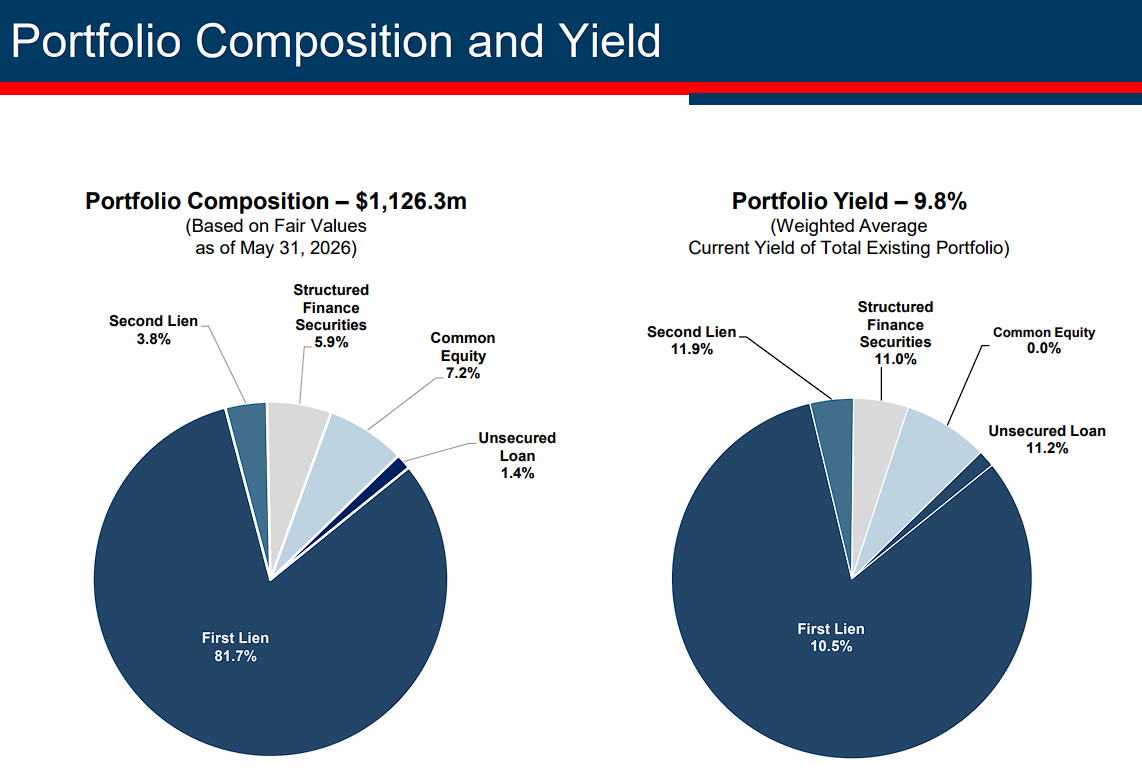
For the fiscal first quarter of 2027 ended May 31st, 2026, assets under management increased 1.6% sequentially to $1.126 billion, supported by $31 million of net originations.
Total investment income was $30.8 million, while adjusted net investment income declined to $7.6 million, or $0.47 per share, from $0.66 one year earlier.
Net asset value fell to $23.23 per share from $24.42, reflecting portfolio markdowns.
Saratoga declared three monthly base dividends of $0.25 per share, or $0.75 for the fiscal second quarter.
Quarterly NII covered only about 63% of that amount, creating a significant gap despite the company’s liquidity and available borrowing capacity.
Credit quality provided one encouraging signal, as non-accruals fell to zero at fair value and 1.2% at cost.
You should nevertheless place greater weight on recurring NII, NAV, and funding costs than on the headline yield.
The first-lien concentration is helpful, but the payout requires a meaningful earnings recovery or support from other taxable income.
High-Yield Monthly Dividend Stock #5: ARMOUR Residential REIT (ARR)
- Dividend Yield: 17.7%
ARMOUR Residential REIT invests primarily in leveraged Agency residential mortgage-backed securities.
Government-backed credit protection limits default risk on the underlying assets, but changes in rates, mortgage spreads, prepayments, financing costs, and hedging results can cause sharp swings in earnings and book value.
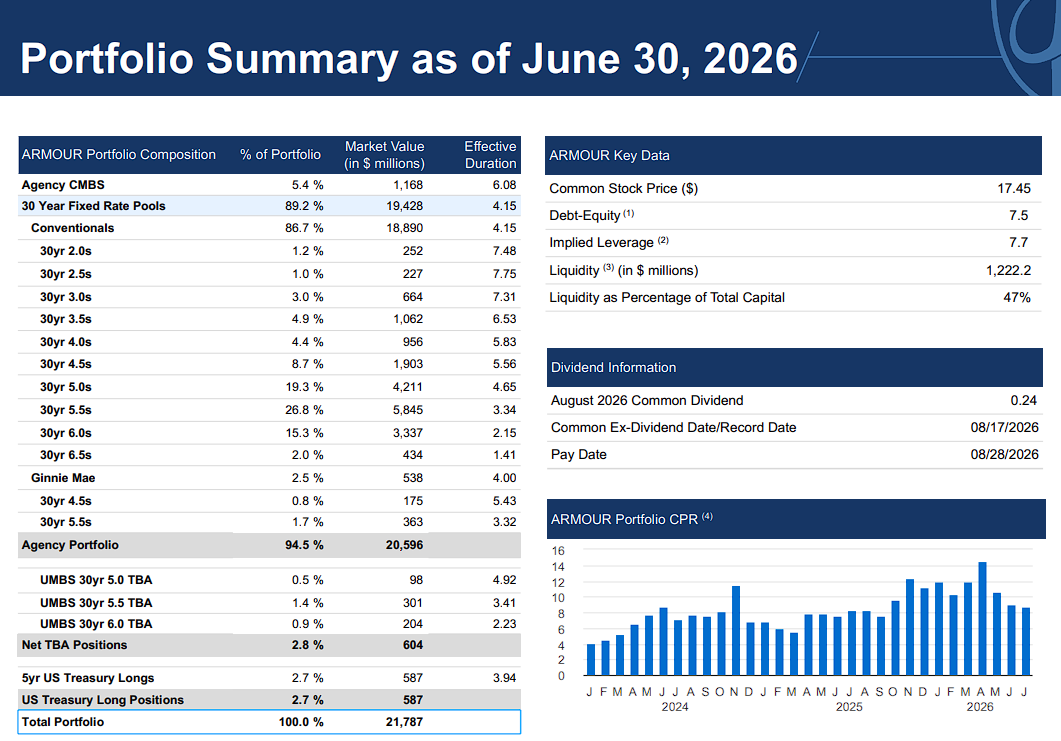
For the second quarter of 2026, ARMOUR generated $0.86 of GAAP net income per share and $0.72 of distributable earnings.
Book value increased to $17.53 per share from $17.42, and the quarter’s $0.72 of dividends produced a 4.8% total economic return.
The investment portfolio expanded to about $21.8 billion, while the company maintained about $1.2 billion of liquidity and an implied leverage ratio near 7.7 times.
ARMOUR’s $0.24 monthly dividend was exactly covered by quarterly distributable earnings, leaving no meaningful margin for error.
The company also raised substantial equity through its at-the-market program and increased its hedge notional, supporting portfolio growth and a defensive interest-rate posture.
Issuing shares can be accretive when done above book value, but rapid balance-sheet expansion magnifies execution risk.
The payout may remain stable if spreads and funding conditions cooperate; however, its thin coverage and the mortgage REIT’s history of dividend resets warrant close attention to book value and distributable earnings.
High-Yield Monthly Dividend Stock #4: Orchid Island Capital (ORC)
- Dividend Yield: 18.3%
Orchid Island Capital is an externally managed mortgage REIT that invests on a leveraged basis in Agency residential mortgage-backed securities.
Its portfolio includes pass-through and structured Agency RMBS, so earnings and book value are highly sensitive to mortgage spreads, rates, prepayments, and hedging.
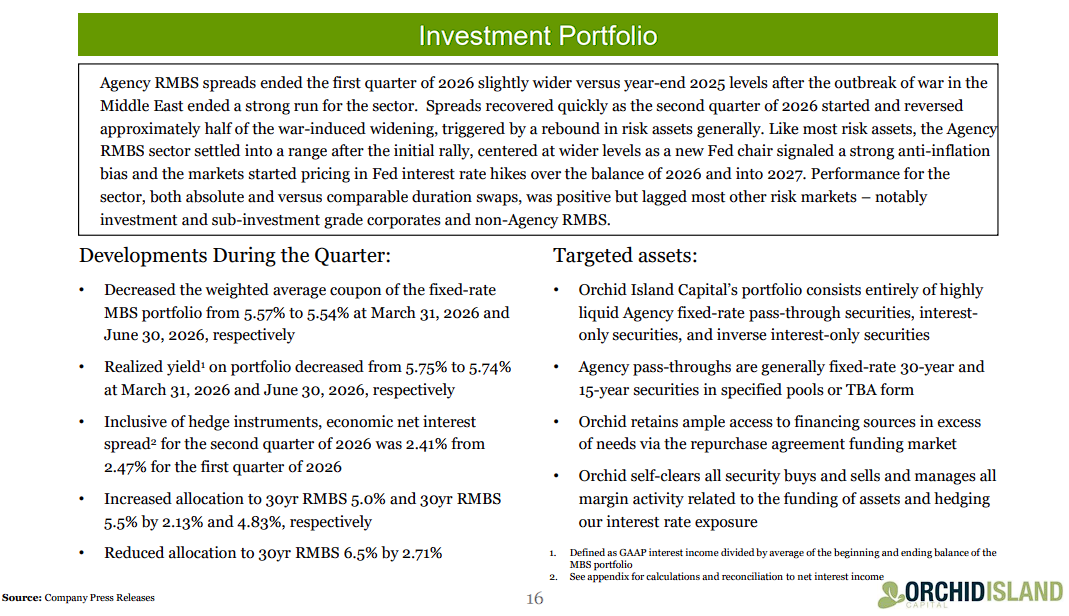
Orchid’s second-quarter 2026 results improved markedly.
Net income was $89.2 million, or $0.44 per share, including $60.0 million of net interest income and $36.0 million of realized and unrealized gains on RMBS and derivatives.
Book value increased to $7.22 per share from $7.08, and the $0.30 of quarterly dividends helped produce a 6.2% total return.
Liquidity remained substantial at $776 million, or about 54% of equity.
The company pays $0.10 per share monthly after cutting the dividend by 16.7% in April.
Second-quarter GAAP earnings exceeded the $0.30 payout, but gains and losses on securities and hedges can reverse quickly and do not necessarily equal REIT taxable income.
Orchid continued issuing common shares and also repurchased stock below book value, actively managing capital around market conditions.
The current yield is exceptionally high because investors expect continued volatility.
Sustainable returns will require stable net interest income, disciplined leverage, and protection of book value.
High-Yield Monthly Dividend Stock #3: Prospect Capital (PSEC)
- Dividend Yield: 19.0%
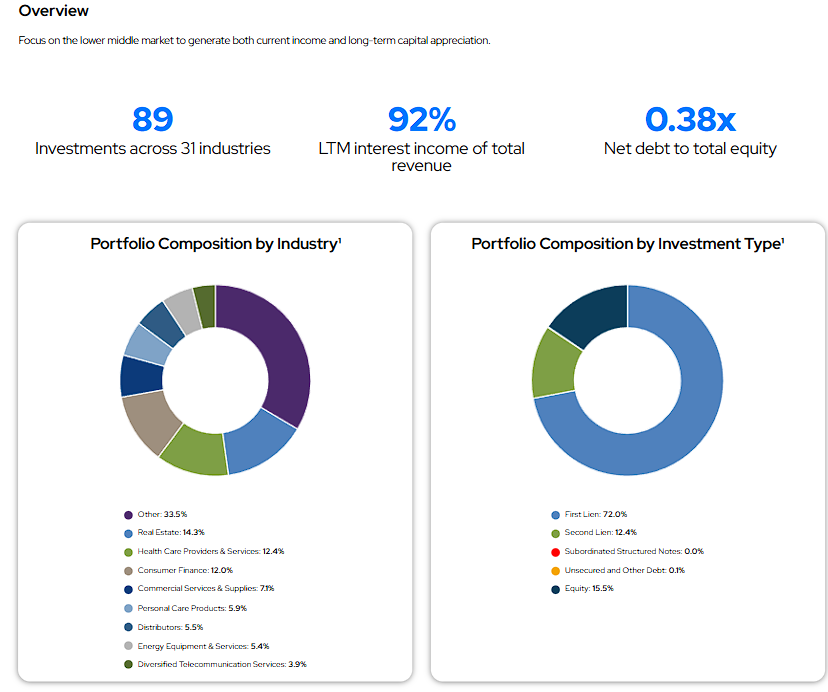
Prospect Capital is a large business development company providing debt and equity capital to U.S. middle-market businesses.
Its portfolio includes senior secured loans, subordinated credit, structured products, and real estate investments, creating diversification but also considerable valuation and credit complexity.
For the fiscal fourth quarter ended June 30th, 2026, net investment income was $77.7 million, or $0.15 per share, compared with $0.16 in the prior quarter.
Net asset value declined to $5.71 per share from $6.05 in March, and the company recorded a $38.1 million net loss applicable to common shareholders.
For the full fiscal year, NII was $0.68 per share, down from $0.77 one year earlier.
Prospect declared monthly common distributions of $0.035 per share for September and October, equal to $0.105 over three months.
Quarterly NII covered that reduced payout, but the continuing decline in NAV and per-share income remains a major warning sign.
Management has increased first-lien senior secured loans and continues exiting selected real estate holdings, which may simplify the risk profile over time.
The company also reported that six property exits during the fiscal year generated an 18% unlevered gross cash internal rate of return.
Even so, investors should scrutinize non-accruals, payment-in-kind income, external-management fees, and NAV before treating the 19.0% yield as dependable income.
Deep Dive: Click here to download (for free) our most recent 3-Page Sure Analysis PDF report on Prospect Capital (PSEC).
High-Yield Monthly Dividend Stock #2: Invesco Mortgage Capital (IVR)
- Dividend Yield: 20.0%
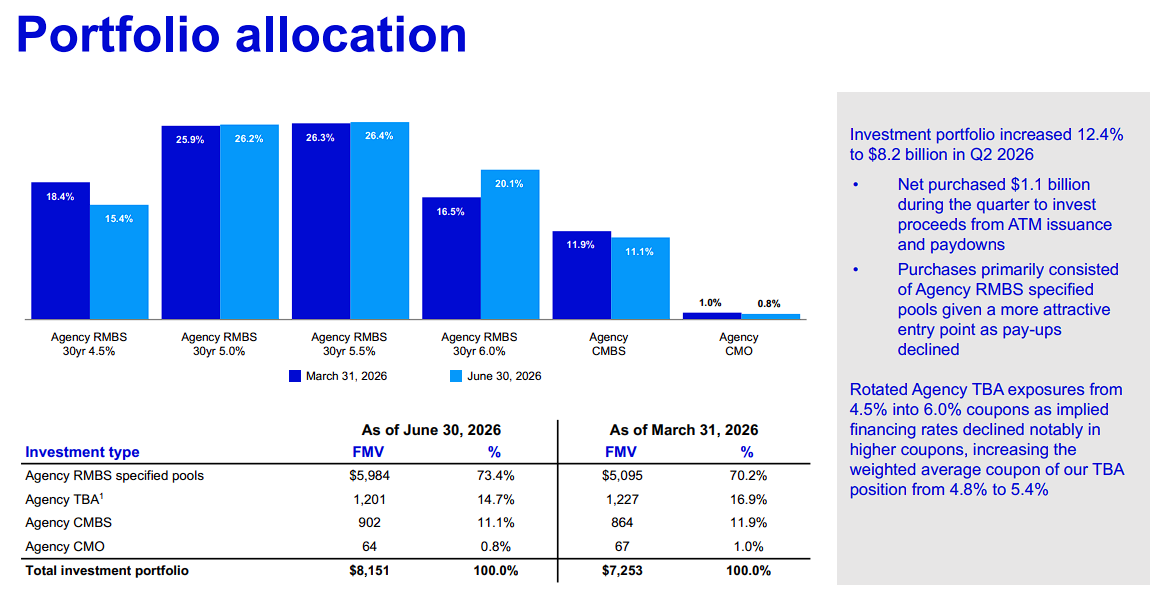
Invesco Mortgage Capital is an externally managed mortgage REIT focused primarily on Agency residential and commercial mortgage-backed securities.
It finances these assets with repurchase agreements and uses derivatives to manage interest-rate exposure, making book value and earnings sensitive to spreads, leverage, and hedging.
In the second quarter of 2026, net income was $0.34 per common share, compared with a $0.28 loss in the first quarter.
Earnings available for distribution were $0.50 per share, down from $0.55, while book value edged down to $8.03 per share from $8.08.
Monthly dividends totaled $0.36 per share, producing a 3.8% quarterly economic return.
Net interest income increased to $30.1 million as lower funding costs partly offset a decline in average asset yields.
The $0.12 monthly dividend was covered by quarterly earnings available for distribution, leaving a moderate cushion.
Economic leverage remained 7.5 times, while the GAAP debt-to-equity ratio increased to 6.3 times from 6.1 times.
Under new chief executive Kevin Collins and president David Lyle, management remains constructive on Agency RMBS and CMBS valuations heading into the second half.
Even with government-backed assets, a sharp move in rates or mortgage spreads can quickly erode book value.
Investors should keep tracking leverage, economic return, and dividend coverage rather than relying on the headline yield alone.
High-Yield Monthly Dividend Stock #1: Oxford Square Capital (OXSQ)
- Dividend Yield: 31.6%
Oxford Square Capital is a business development company investing in senior secured debt, collateralized loan obligation equity, and smaller equity positions.
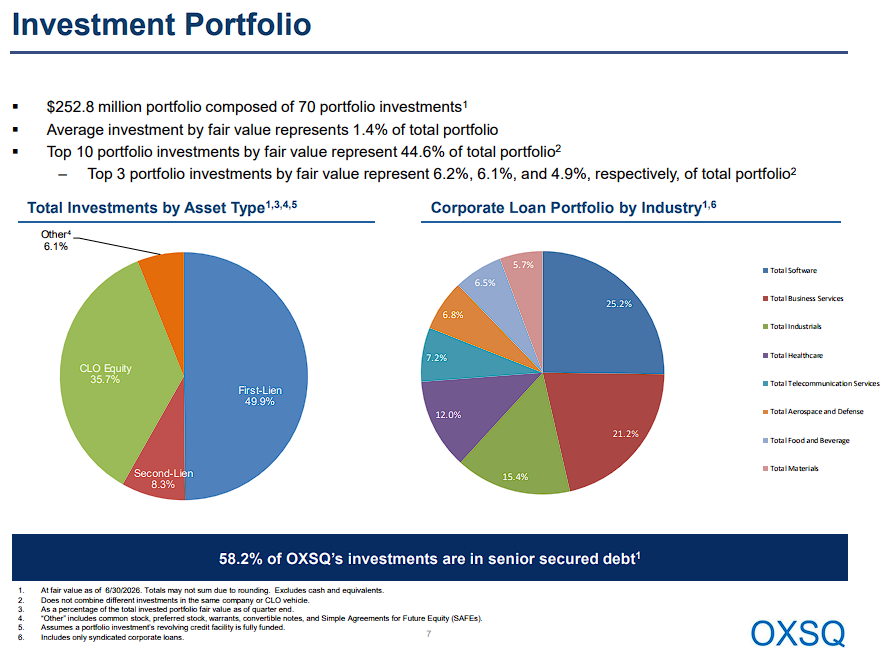
CLO equity can generate substantial cash income, but it is complex, cyclical, and sensitive to defaults, loan prices, and financing conditions.
Second-quarter 2026 total investment income increased sequentially to $9.4 million.
Net investment income was $5.1 million, or $0.05 per share, as a larger share count offset higher aggregate NII.
The weighted average debt yield improved to 14.9%, while the effective yield on CLO equity recovered to 8.1%.
Nevertheless, net asset value declined to $1.29 per share from $1.32 as realized losses exceeded unrealized appreciation and operating income.
Oxford Square maintained its $0.035 monthly distribution through December, equal to $0.105 per quarter.
Quarterly NII covered less than half of that amount, making the 31.6% headline yield a distress signal rather than unusually safe income.
The company issued 11.3 million shares through its at-the-market program, raising $17.8 million, and invested $19.9 million during the quarter.
New capital supports deployment, but substantial issuance can dilute per-share earnings when opportunities do not produce adequate returns.
Investors should monitor recurring NII, CLO cash distributions, NAV, and leverage closely.
Without a material earnings improvement, further distribution cuts remain a meaningful risk.
Final Thoughts
Monthly payments can make portfolio income easier to match with recurring expenses, but payment frequency does not make a dividend safer.
This ranking is best used as a research shortlist rather than a list of automatic buys, as every Top 20 security currently carries an F Dividend Risk Score in the Sure Analysis Research Database.
Most of the companies are BDCs or mortgage REITs, whose payouts depend on credit quality, funding costs, leverage, portfolio yields, and changes in NAV or book value.
Several quoted yields also reflect only regular base dividends, while supplemental payments can be reduced and Himalaya Shipping’s cash distributions vary with freight-market conditions.
Before considering any name, compare its regular payout with recurring earnings, examine recent NAV or book-value trends, and review leverage, non-accruals, liquidity, and distribution history.
The largest yields, particularly Oxford Square’s 31.6%, signal substantial market concern and should receive the greatest scrutiny.
Further Reading
If you are interested in finding high-quality dividend growth stocks and/or other high-yield securities and income securities, the following Sure Dividend resources will be useful:
- High Dividend Stocks: 4%+ Yields
- Dividend Kings: 50+ years of rising dividends
- Dividend Champions: 25+ years of rising dividends
- Monthly Dividend Stocks: Pay dividends every month
- Dividend Aristocrats: 25+ years of rising dividends and in the S&P 500