Updated on July 9th, 2025 by Felix Martinez
Stepan Company (SCL) has a dividend track record that few companies can rival. The company currently sports a streak of 57 consecutive years of increasing dividends, making it one of just 55 stocks in the entire stock market with a dividend increase streak above 50 years.
That places the company among the elite Dividend Kings, a select group of stocks that have increased their payouts for at least 50 consecutive years. You can see the full list of all 55 Dividend Kings here.
We have compiled a comprehensive list of all 55 Dividend Kings, including key financial metrics such as price-to-earnings ratios and dividend yields. You can access the spreadsheet by clicking on the link below:
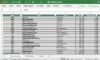
Dividend Kings are the “best of the best” when it comes to rewarding shareholders with cash returns and increasing their dividend payouts annually.
This article will discuss Stepan’s dividend and valuation outlook.
Business Overview
Stepan traces its origins back to 1932 when it was founded by 23-year-old Alfred C. Stepan Jr., and was known at the time as Chemical Distributors.
The fledgling enterprise’s first product was a chemical that controlled road dust on Illinois’ country thoroughfares, sold from a rented desk at Chicago’s North Pier Terminal. These humble beginnings marked the start of what would become a chemical powerhouse.
The company is still headquartered in Illinois and manufactures basic and intermediate chemicals, including surfactants, specialty products, germicidal and fabric softening quaternaries, phthalic anhydride, polyurethane polyols, and special ingredients for the food, supplement, and pharmaceutical markets.
It expanded from that desk at the North Pier Terminal to achieve a truly global reach, with 22 manufacturing sites in 12 countries across North and South America, Asia, and Europe.
Stepan also boasts global R&D centers, a worldwide distribution network, and a broad portfolio of products to meet the diverse needs of a wide range of customers.
Stepan is organized into three distinct business lines: surfactants, polymers, and specialty products. These businesses serve a wide variety of end markets, meaning that Stepan is not beholden to a handful of industries; an important trait during an economic downturn.

Source: Investor presentation
The surfactants business is Stepan’s largest by revenue, accounting for ~70% of total sales in the most recent quarter. A surfactant is an organic compound that contains both water-soluble and water-insoluble components.
Surfactants are key ingredients in consumer and industrial cleaning compounds, including detergents, cleansing agents, emulsifiers, foaming or defoaming agents, viscosity modifiers, degreasers, and other products.
Stepan offers a broad range of surfactant chemicals and creates custom surfactants and formulated blends to meet the unique demands of its customers.
These surfactants are used in a wide variety of applications, such as a foaming agent for shampoo, agents used in oil recovery, and emulsifiers for agricultural insecticides.
The polymers business is Stepan’s second-largest by revenue, accounting for approximately 27% of the company’s total revenue. The polymers division is further broken down into three segments: polyester polyols, powder coating resins, and phthalic anhydride. Polyester polyols are used in a wide variety of both polyurethane and polyisocyanurate applications.
Stepan produces a full range of aromatic and aliphatic polyester polyols for use in rigid foams, as well as many coatings, adhesives, sealants, and elastomers applications.
Polyester resins are designed with either hydroxyl or carboxyl functionality and are combined with various curatives to form durable, attractive, and environmentally friendly powder coatings. The company’s RUCOTE resins can enhance the quality, performance, and visual appeal of finishes on a wide variety of products.
Phthalic anhydride is an essential part of Stepan’s polymers division. In addition to being used in polyester polyol chemistry, phthalic anhydride is a key raw material for plasticizers and unsaturated polyester resins.
The third division, specialty chemicals, is Stepan’s smallest in terms of revenue, accounting for only about 3% of the company’s total revenue. The segment produces science-based nutritional oils used in the food, nutrition, and pharmaceutical industries.
Its products are naturally derived ingredients that provide specific nutritional benefits in end markets like dietary supplements, beverages, nutritional powders, infant nutrition, and weight management.
Growth Prospects


Source: Investor presentation
Competitive Advantages & Recession Performance
Stepan’s competitive advantages include its diverse customer base and end markets, its global supply chain and distribution network, as well as its technical expertise. Stepan is a true market leader in its niche, and this has fueled its growth over the past 80+ years.
Stepan’s customers are incredibly diverse, encompassing various end markets, including agricultural products, construction, dietary supplements, cleaning products, personal care, laundry, oilfield services, pharmaceuticals, and many more.
There are not many businesses in the world that serve such diverse end markets and offer Stepan exposure to numerous different industries. This creates multiple growth opportunities, as well as resilience during economic downturns.
Additionally, the company operates globally. This allows Stepan to have technical experts and sales professionals on the ground near its customers, developing products and solving problems more quickly and efficiently than if it were centralized in the U.S.
Adding to its vertical supply chain, which improves margins and reduces supplier risk, Stepan’s global footprint is a sizable asset.
Moreover, Stepan’s products are essential and not discretionary. As a result, the company fares very well during recessions.
During the Great Recession, it performed tremendously well; Stepan’s earnings-per-share during and after the Great Recession are below:
- 2007 earnings-per-share of $0.75
- 2008 earnings-per-share of $1.20 (increase of 60%)
- 2009 earnings-per-share of $2.92 (increase of 143%)
- 2010 earnings-per-share of $2.95 (increase of 1.0%)
Revenue increased each year during this period, except for 2009. However, a significant margin improvement during this period enabled Stepan to grow its earnings impressively, despite the economic malaise gripping the world.
Operating margins were just 1.4%, in 2006 but peaked at 8.2% in 2009, driving the earnings growth Stepan enjoyed during this period.
Stepan is a very recession-resistant business, which is a significant advantage for the shareholders. The company again demonstrated its resilience in 2020, as it continued to raise its dividend despite the challenging economic conditions caused by the pandemic.
Valuation & Expected Returns
With the current share price at approximately $59, Stepan is trading at a price-to-earnings ratio of 18.6, which is below our estimated fair value of 19 times earnings.
Stepan stock appears to be fairly valued at the moment. If the P/E multiple expands from 18.6 to 19 over the next five years, the valuation will increase annual returns by 1.5% per year.
The company does use its capital to enhance its business through acquisitions, but Stepan, as a Dividend King, has been returning cash to shareholders for more than a half-century.

Source: Investor Presentation
Stepan has been trying to optimize its capital allocation, as it has numerous attractive endeavors to invest in. It aims to grow its business with large customers while also focusing on achieving operational safety and cost savings.
Additionally, the company has increased its dividend for 57 consecutive years. It has grown its dividend by 8.1% per year on average over the last five years.
That’s very impressive. The growth rate can be sustained for the long term, as the expected payout ratio for this year is 48%.
While the yield isn’t very impressive at just 2.6%, investors can sleep well at night knowing their payout is safe and will likely continue to rise for several more years.
The 2.6% yield and the projected 15% annual EPS growth, and the 1.5% tailwind from multiple expansion, resulting in an expected total yearly return of 19% over the next five years.
Stepan receives a buy rating around its current stock price.
Final Thoughts
Due to its low dividend yield, Stepan doesn’t qualify as a high-income stock, despite its Dividend King status. However, the company raises its dividend year after year.
In addition, Stepan is a leader in its niche and has demonstrated a strong business over the long run, with a growing dividend. Thus, we rate the stock as a buy at the current price.
Additional Reading
The following databases of stocks contain stocks with very long dividend or corporate histories, ripe for selection for dividend growth investors.
-
- The Dividend Aristocrats List: S&P 500 stocks with 25+ years of dividend increases.
- The High Yield Dividend Aristocrats List is comprised of the 20 Dividend Aristocrats with the highest current yields.
- The Dividend Achievers List is comprised of ~350 stocks with 10+ years of consecutive dividend increases.
- The High Yield Dividend Kings List is comprised of the 20 Dividend Kings with the highest current yields.
- The Blue Chip Stocks List: stocks that qualify as Dividend Achievers, Dividend Aristocrats, and/or Dividend Kings
- The High Dividend Stocks List: stocks that appeal to investors interested in the highest yields of 5% or more.
- The Monthly Dividend Stocks List: stocks that pay dividends every month, for 12 dividend payments per year.
- The Dividend Champions List: stocks that have increased their dividends for 25+ consecutive years.
Note: Not all Dividend Champions are Dividend Aristocrats because Dividend Aristocrats have additional requirements like being in The S&P 500. - The Dividend Contenders List: 10-24 consecutive years of dividend increases.
- The Dividend Challengers List: 5-9 consecutive years of dividend increases.
- The Best DRIP Stocks: The top 15 Dividend Aristocrats with no-fee dividend reinvestment plans.
- The High ROIC Stocks List: The top 10 stocks with high returns on invested capital.
- The High Beta Stocks List: The 100 stocks in the S&P 500 Index with the highest beta.
- The Low Beta Stocks List: The 100 stocks in the S&P 500 Index with the lowest beta.
- The Complete List of Russell 2000 Stocks
- The Complete List of NASDAQ-100 Stocks