Updated on July 11th, 2025 by Felix Martinez
The Dividend Kings are an illustrious group of companies. These companies stand apart from the vast majority of the market as they have raised dividends for at least 50 consecutive years.
We believe that investors should view the Dividend Kings as the highest-quality dividend growth stocks to buy for the long term.
With this in mind, we created a full list of all the Dividend Kings.
You can download the full list, along with important financial metrics such as dividend yields and price-to-earnings ratios, by clicking the link below:
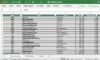
This group is so exclusive that there are just 52 companies that qualify as a Dividend King. One of the constituents of the Dividend Kings list is Middlesex Water Company (MSEX), a water utility company that has been in business for over 125 years.
This article will discuss the company’s business overview, growth prospects, competitive advantages, and expected returns.
Business Overview
Middlesex Water Company was formed in 1897, making the company one of the oldest water and wastewater utility names in the U.S. The company has operations primarily in New Jersey and has an annual revenue of approximately $192 million.
Like many of its peers, Middlesex is primarily focused on the regulated portion of its business.

Source: Investor Presentation
Middlesex provides basic water-related services to customers, such as selling, distributing, collecting, and treating water. The non-regulated business includes service contracts that include the operation and maintenance of municipal private water and wastewater systems in New Jersey and Delaware.
The vast majority of revenue comes from the regulated side. One of its most significant service areas includes Middlesex County, where the company provides water services to over 61,000 retail customers. This business contributed ~60% of revenue last year.
Growth Prospects
Utility companies are typically classified as slow, but steady growers. This doesn’t necessarily apply to Middlesex, however, as the company had an earnings-per-share compound annual growth rate of 7.7% for the 2014 to 2024 time period. This is a strong growth rate for a business that is mostly regulated. It should be noted that growth for the company hasn’t always been in a straight line over the long term.
Since the majority of revenue comes from regulated business, Middlesex is at the mercy of the approval of rate increases to grow.
Fortunately, the company heavily invests in its infrastructure in order to justify customer rate increases. For example, the New Jersey Board of Public Utilities approved a 40% increase in Middlesex’s rates in one of the company’s most significant service areas for 2022. This wasn’t just a one-time raise, as the approval board has always approved the company’s request to raise rates.
Rate increases will likely continue to be a major factor for the company as Middlesex continues to make significant investments in its aging water infrastructure. This will not only improve the quality of operations but also lead to rate hikes being approved.
Notably, Middlesex has enjoyed an approximate average annual growth of 12.8% in its rates over the last six years.

Source: Investor Presentation
Therefore, it is only natural to expect rate hikes to comprise a significant growth driver for the utility in the upcoming years.
In addition to rate increases, Middlesex can grow by adding new customers while also keeping current customers.
For example, last year, Middlesex completed a new agreement to continue to manage water and sewer utility operations with the Borough of Avalon, New Jersey. The new 10-year agreement takes the place of the prior contract. The new contract provides for the maintenance of operations and customer services.
The non-regulated business could be a significant source of growth as well. In 2013, Middlesex was awarded a $32 million contract to construct and maintain the water distribution network for the Dover Air Force Base in Delaware. This contract will provide decades of recurring revenue, as the contract is for 50 years.
We expect MSEX to grow its earnings-per-share by approximately 4.6% per year on average over the next five years.
Competitive Advantages & Recession Performance
Utility companies often benefit from multiple advantages. The first is that they usually operate in a near-monopoly in the areas that they serve.
In the case of water utilities, Middlesex and its peers provide the most basic staple of all, water. Customers are going to need the services that the company offers, regardless of the strength of the economy.
Middlesex also benefits from its diversified business.

Source: Investor Presentation
Middlesex receives slightly more than 50% of its revenue from residential customers. Still, there are other categories, such as commercial, contract sales, and fire protection, that contribute meaningfully to the company’s business.
Given these built-in advantages, many utilities often outperform other sectors of the market during recessions. Below are Middlesex’s earnings-per-share results before, during, and after the Great Recession:
- 2006 earnings-per-share: $0.82
- 2007 earnings-per-share: $0.87 (6.1% increase)
- 2008 earnings-per-share: $0.89 (2.3% increase)
- 2009 earnings-per-share: $0.72 (19.1% decrease)
- 2010 earnings-per-share: $0.96 (33.3% increase)
Middlesex’s earnings-per-share initially grew during the recessionary period before falling by a high double-digit amount in 2009, showing that the utility wasn’t completely immune to the economic backdrop of the period. One positive was that revenue stayed relatively flat for the 2008 to 2009 period.
Significantly, the company rebounded in a substantial way the very next year and set a new high for earnings-per-share. Growth has primarily been in an uptrend since.
Valuation & Expected Total Returns
Middlesex gained entrance into the Dividend Kings following the company’s dividend increase announcement on October 21st, 2022. The company recently raised its dividend by 4.6% and has now raised its dividend for 52 consecutive years. Middlesex currently yields 2.4%. The company has paid a continuous dividend since 1912.
As previously mentioned, we expect 4.6% EPS growth per year on average over the next five years.
Finally, the last component of total returns will be valuation. Shares are currently trading at 19 times our earnings-per-share projection for the year.
Given the company’s tailwinds and business model, we believe the fair value is 20 times earnings, which is in line with the average valuation of the stock over the last decade. Reverting to our target valuation by 2030 would result in an annual return expansion of 1.5%.
Therefore, Middlesex is forecasted to return 8.5% per year on average through 2020.
Final Thoughts
There is much to like about Middlesex, namely its monopoly status, the high success of rate increase approvals, and the long history of dividend growth. Only the most well-run businesses can pay dividends for as long as Middlesex has.
That said, the stock is trading at a fair value to its average historical valuation since 2014. Despite the attractiveness of the company and its dividend growth streak, we believe investors are better off elsewhere, as forecasted returns over the medium term are very weak. Thus, we recommend a “Hold” at the current price.
Additional Reading
The following databases of stocks contain stocks with very long dividend or corporate histories, ripe for selection for dividend growth investors.
- The Dividend Aristocrats List: S&P 500 stocks with 25+ years of dividend increases.
- The High Yield Dividend Aristocrats List is comprised of the 20 Dividend Aristocrats with the highest current yields.
- The Dividend Achievers List is comprised of ~350 stocks with 10+ years of consecutive dividend increases.
- The High Yield Dividend Kings List is comprised of the 20 Dividend Kings with the highest current yields.
- The Blue Chip Stocks List: stocks that qualify as Dividend Achievers, Dividend Aristocrats, and/or Dividend Kings
- The High Dividend Stocks List: stocks that appeal to investors interested in the highest yields of 5% or more.
- The Monthly Dividend Stocks List: stocks that pay dividends every month, for 12 dividend payments per year.
- The Dividend Champions List: stocks that have increased their dividends for 25+ consecutive years.
Note: Not all Dividend Champions are Dividend Aristocrats because Dividend Aristocrats have additional requirements like being in The S&P 500. - The Dividend Contenders List: 10-24 consecutive years of dividend increases.
- The Dividend Challengers List: 5-9 consecutive years of dividend increases.
- The Best DRIP Stocks: The top 15 Dividend Aristocrats with no-fee dividend reinvestment plans.
- The High ROIC Stocks List: The top 10 stocks with high returns on invested capital.
- The High Beta Stocks List: The 100 stocks in the S&P 500 Index with the highest beta.
- The Low Beta Stocks List: The 100 stocks in the S&P 500 Index with the lowest beta.
- The Complete List of Russell 2000 Stocks
- The Complete List of NASDAQ-100 Stocks