Updated on July 10th, 2025 by Felix Martinez
The Dividend Kings are an illustrious group of companies. These companies stand apart from the vast majority of the market as they have raised dividends for at least 50 consecutive years.
We believe that investors should view the Dividend Kings as the highest-quality dividend growth stocks to buy for the long term.
With this in mind, we created a full list of all the Dividend Kings.
You can download the full list, along with important financial metrics such as dividend yields and price-to-earnings ratios, by clicking the link below:
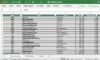
This group is so exclusive that there are only 55 companies that qualify as Dividend Kings. United Bankshares (UBSI) raised its dividend for the 50th consecutive year in 2023, joining the list of Dividend Kings.
This article will provide an overview of the company’s business, its growth prospects, competitive advantages, and expected returns.
Business Overview
United Bankshares was formed in 1982 and has since acquired more than 30 separate banking institutions.
This focus on acquisitions, in addition to organic growth, has enabled United to expand into a regional powerhouse in the Mid-Atlantic, boasting approximately $30 billion in total assets and annual revenue of around $1.3 billion.

Source: Investor Presentation
Growth Prospects
United has failed to grow its earnings per share over the last four years, as the company has struggled with translating asset and loan growth into profits.
The primary reason behind the bank’s stagnation is the surge in interest rates to 23-year highs, which has exerted pressure on the bank’s net interest margin due to high deposit costs amid intense competition among banks for deposits.
On the bright side, as inflation has finally moderated, the Fed has just begun to reduce interest rates. As a result, the net interest margin of United is likely to improve in the upcoming years.
United has consistently grown through acquisitions, and we do not believe that will change. Overall, thanks to acquisitions and an expected improvement in the net interest margin, we anticipate United to grow its earnings per share by 2% annually on average over the next five years.
This growth rate is lower than the bank’s average annual growth rate of 3.9% over the last decade, but we prefer to be somewhat conservative, given the stagnation in recent years.

Source: Investor Presentation
Competitive Advantages & Recession Performance
United’s competitive advantage is in its strong market position in the areas it serves. It is headquartered in West Virginia, where competition is relatively light, and it is expanding into more densely populated areas, such as northern Virginia.
That does not make it immune to recessions, but its performance in 2008 and 2009 was exemplary, and it held up in very challenging conditions in 2020, while the bank thrived in 2021.
Below are the company’s earnings-per-share results during and after the Great Recession:
- 2007 earnings-per-share: $1.32
- 2008 earnings-per-share: $1.52 (15% increase)
- 2009 earnings-per-share: $1.51 (~1% decrease)
- 2010 earnings-per-share: $1.81 (20% increase)
The company grew its diluted earnings per share in 2008, followed by a minor decline in 2009, which was the worst year of the recession. United Bankshares then quickly rebounded with 20% earnings growth in 2010.
Valuation & Expected Total Returns
We expect United Bankshares to generate earnings per share of $3.05 in 2025. At the current share price, UBSI stock trades for a price-to-earnings ratio of 12.5.
We consider a fair value of 12 times earnings, given the current peer valuations. We see an increased risk for United, given the relatively weak historical performance of the company’s net interest margin, and we think investors will pay slightly less for the stock as a result. Shares are somewhat overvalued at the moment.
A contracting P/E multiple could reduce annual returns by -0.5% over the next five years. Dividends will also boost shareholder returns. UBSI stock is currently yielding 3.9%.
Given also expected 2.0% average annual growth of earnings per share, UBSI is expected to return 5.4% per year through 2030. This is a relatively weak expected rate of return, which suggests holding UBSI stock.
Final Thoughts
United is now expected to produce annual returns of 5.4% in the years to come. The yield is attractive at 3.9% and is expected to remain stable for years to come, making United a potential option for income investors.
However, the stock appears somewhat overvalued at its current price. As a result, we advise investors to wait for a significantly lower entry point before considering purchasing this stock.
Additional Reading
The following databases of stocks contain stocks with very long dividend or corporate histories, ripe for selection for dividend growth investors.
- The Dividend Aristocrats List: S&P 500 stocks with 25+ years of dividend increases.
- The High Yield Dividend Aristocrats List is comprised of the 20 Dividend Aristocrats with the highest current yields.
- The Dividend Achievers List is comprised of ~350 stocks with 10+ years of consecutive dividend increases.
- The High Yield Dividend Kings List is comprised of the 20 Dividend Kings with the highest current yields.
- The Blue Chip Stocks List: stocks that qualify as Dividend Achievers, Dividend Aristocrats, and/or Dividend Kings
- The High Dividend Stocks List: stocks that appeal to investors interested in the highest yields of 5% or more.
- The Monthly Dividend Stocks List: stocks that pay dividends every month, for 12 dividend payments per year.
- The Dividend Champions List: stocks that have increased their dividends for 25+ consecutive years.
Note: Not all Dividend Champions are Dividend Aristocrats because Dividend Aristocrats have additional requirements like being in The S&P 500. - The Dividend Contenders List: 10-24 consecutive years of dividend increases.
- The Dividend Challengers List: 5-9 consecutive years of dividend increases.
- The Best DRIP Stocks: The top 15 Dividend Aristocrats with no-fee dividend reinvestment plans.
- The High ROIC Stocks List: The top 10 stocks with high returns on invested capital.
- The High Beta Stocks List: The 100 stocks in the S&P 500 Index with the highest beta.
- The Low Beta Stocks List: The 100 stocks in the S&P 500 Index with the lowest beta.
- The Complete List of Russell 2000 Stocks
- The Complete List of NASDAQ-100 Stocks