Updated on July 9th, 2025 by Felix Martinez
While there are many dividend-paying stocks in the market, there are only 50 stocks that have offered a rising dividend for at least 50 consecutive years. This exclusive group of stocks is referred to as the Dividend Kings.
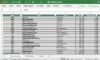
You can see the full downloadable spreadsheet of all 55 Dividend Kings (along with important financial metrics such as dividend yields, payout ratios, and price-to-earnings ratios) by clicking on the link below:
Earlier this year, Universal Corporation (UVV) increased its dividend for the 55th consecutive year. This article will review the company to determine if the stock earns a buy recommendation today.
Business Overview
Universal Corporation is the world’s largest exporter and importer of tobacco leaves. It is also a wholesale purchaser and processor of tobacco, operating as a go-between for farms and the companies that manufacture cigarettes, pipe tobacco, and cigars. Universal Corporation has been in business since 1886 and is headquartered in Richmond, Virginia.
Universal Corporation has an extensive global presence.

Source: Investor Presentation
Universal Corporation has a presence in more than 30 countries and employs over 20,000 permanent and seasonal employees.
Universal Corporation has had a difficult couple of years. Earnings per share actually declined from 2010 to 2023. There have been years of sporadic growth, but overall, EPS declined in that 13-year period.
Still, the company’s business has some bright spots that could lead to future returns, not to mention a very appealing dividend yield, which currently stands at nearly 5.7%.
Growth Prospects
As the world’s largest exporter and importer of leaf tobacco, Universal Corporation offers a size and scale that competitors cannot match.
This means that the company can count among its customers the largest tobacco product manufacturers in the world.

Source: Investor Presentation
Six of Universal Corporation’s top customers are among the world’s largest tobacco manufacturers. These companies control more than four-fifths of the global tobacco market.
More than 60% of Universal Corporation’s annual revenue usually comes from these customers. Counting the most prominent names in the sector as customers likely means that the vast majority of revenues can be relied upon to be stable. This gives the company stability and reassures shareholders that the business can be sustainable.
Universal Corporation also strives to source most of its sales to meet anticipated demand. This means that the company targets its inventory to customers with committed sales orders. This allows Universal Corporation to avoid being stuck holding products or being forced to sell at a lower price to reduce inventory.
Finally, as smoking rates decline in the U.S. and elsewhere, companies in the tobacco sector must figure out other ways to grow revenue.

Source: Investor Presentation
Universal Corporation is attempting to do just that. The company made its first such acquisition earlier in 2020 when it added FruitSmart Inc. to its portfolio—FruitSmart processes fruit and vegetable ingredients, marketing them to customers worldwide.
Next, Universal acquired Silva International, a privately held company specializing in the processing of dehydrated vegetables, fruits, and herbs. Silva procures more than 60 types of dehydrated vegetables, fruits, and herbs from over 20 countries worldwide.
The company continues to make bolt-on acquisitions, such as the purchase of Shank’s Extracts, a privately held specialty ingredient, flavoring, and food company with a portfolio of over 2,400 extracts, distillates, natural flavors, and colors.
Diversifying the business is a very prudent move, in our opinion, as the number of smokers declines with each passing year.
Competitive Advantages & Recession Performance
Universal Corporation’s chief business tends to rely on a reliable consumer, even though tobacco usage has declined. Consumers who do smoke are likely to seek out tobacco products regardless of the state of the economy. This makes the business reliable even in an unreliable time.
While earnings growth has been weak in recent years, Universal Corporation navigated the last recession very well. The company’s earnings-per-share before, during, and after the Great Recession are listed below:
- 2006 adjusted earnings-per-share: $3.48
- 2007 adjusted earnings-per-share: $4.02 (15.5% increase)
- 2008 adjusted earnings-per-share: $4.32 (7.5% increase)
- 2009 adjusted earnings-per-share: $5.68 (31.5% increase)
- 2010 adjusted earnings-per-share: $5.30 (6.7% decrease)
- 2011 adjusted earnings-per-share: $3.25 (38.7% decrease)
- 2012 adjusted earnings-per-share: $4.66 (43.4% increase)
Universal Corporation’s earnings per share improved by more than 41% from 2007 through 2009, during a challenging market environment for many companies.
Earnings per share did not start to suffer a steep decline until after the worst of the recession had passed. It is worth noting that the company has yet to reach its 2009 high for annual earnings per share.
Generally, we believe that the relatively resilient demand for tobacco leaves will continue to produce relatively robust results for the company, even during challenging economic periods. This was demonstrated again during both the COVID-19 pandemic in 2020 and the current challenging macroeconomic landscape.
Valuation & Expected Returns
Like all stocks, Universal Corporation’s total returns will consist of dividend payments, earnings growth, and changes in valuation. Using the annual dividend of $3.28, shares of Universal Corporation yield 5.7%.
The dividend payout ratio has climbed steadily in recent years. It was 84% in fiscal 2023, but the projected payout ratio for this fiscal year is more reasonable 71%. We don’t believe a dividend cut is imminent, but we advise caution regarding the dividend. At the very least, dividend growth is likely to remain weak until earnings growth accelerates.
Due to the company’s relatively weak performance in terms of profitability over the last decade, we anticipate modest earnings growth of 1.5% annually over the next five years. Still, this will positively contribute to shareholder returns.
Finally, in our view, expansion of the valuation multiple is not unlikely. With an expected earnings per share of $4.60 for fiscal year 2025, shares are trading at a price-to-earnings ratio of 12.6. With our target valuation of 13 times earnings, multiple expansion could add 1.0% annually to returns over the next five years.
Therefore, expected total returns would consist of the following:
- 1.5% earnings growth
- 5.7% dividend yield
- 1.0% multiple expansion
In total, we expect annual returns of 8.2% over the next five years. This projection warrants a hold rating for Universal Corporation. We note that the stock has a certain level of appeal for income investors due to the very high yield, even if dividend growth is likely to remain muted.
Final Thoughts
Universal Corporation is one of the more recent additions to the Dividend Kings. There are only 55 companies that have the required 50+ years of dividend growth to gain membership into this exclusive group.
Universal is also a high dividend stock, with a yield approaching 6%.
While Universal Corporation offers a high yield, it has also struggled to grow earnings for more than a decade, which in turn has caused the dividend growth rate to slow considerably.
The company’s dividend growth has not been accompanied by earnings growth, resulting in a higher dividend payout ratio. The good news is that the expected payout ratio for the current fiscal year is expected to be lower than in previous years.
In addition, total return potential earns Universal Corporation a hold rating from Sure Dividend.
Additional Reading
The following databases of stocks contain stocks with very long dividend or corporate histories, ripe for selection for dividend growth investors.
-
- The Dividend Aristocrats List: S&P 500 stocks with 25+ years of dividend increases.
- The High Yield Dividend Aristocrats List is comprised of the 20 Dividend Aristocrats with the highest current yields.
- The Dividend Achievers List is comprised of ~350 stocks with 10+ years of consecutive dividend increases.
- The High Yield Dividend Kings List is comprised of the 20 Dividend Kings with the highest current yields.
- The Blue Chip Stocks List: stocks that qualify as Dividend Achievers, Dividend Aristocrats, and/or Dividend Kings
- The High Dividend Stocks List: stocks that appeal to investors interested in the highest yields of 5% or more.
- The Monthly Dividend Stocks List: stocks that pay dividends every month, for 12 dividend payments per year.
- The Dividend Champions List: stocks that have increased their dividends for 25+ consecutive years.
Note: Not all Dividend Champions are Dividend Aristocrats because Dividend Aristocrats have additional requirements like being in The S&P 500. - The Dividend Contenders List: 10-24 consecutive years of dividend increases.
- The Dividend Challengers List: 5-9 consecutive years of dividend increases.
- The Best DRIP Stocks: The top 15 Dividend Aristocrats with no-fee dividend reinvestment plans.
- The High ROIC Stocks List: The top 10 stocks with high returns on invested capital.
- The High Beta Stocks List: The 100 stocks in the S&P 500 Index with the highest beta.
- The Low Beta Stocks List: The 100 stocks in the S&P 500 Index with the lowest beta.
- The Complete List of Russell 2000 Stocks
- The Complete List of NASDAQ-100 Stocks